
RECENT POSTS
15.January.2026
BPC-157 in Sports Medicine: Promise, Precaution, and the Need for Responsible Stewardship
0 Comments
15.January.2026
Anti-inflammatory Benefits of BPC-157: A Comprehensive Review for Medical Professionals
0 Comments
21.November.2025
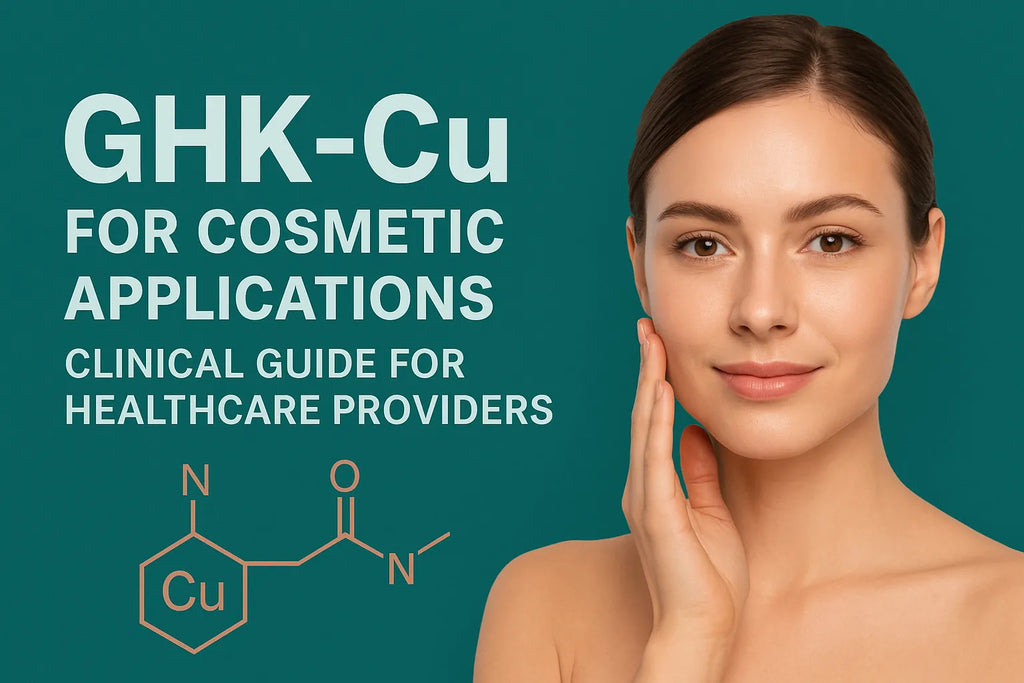
GHK-Cu for Cosmetic Applications: Clinical Guide for Healthcare Providers
0 Comments
20.November.2025
CarniTide™ & CarniSema™: Enhanced Weight Loss Through L-Carnitine Compounding
0 CommentsGHK-Cu for Cosmetic Applications: Clinical Guide for Healthcare Providers
Introduction
The copper tripeptide GHK-Cu (glycyl-l-histidyl-l-lysine copper) has emerged as a significant regenerative peptide in cosmetic dermatology and aesthetic medicine. As patient demand for evidence-based, minimally invasive procedures continues to grow, healthcare providers need comprehensive knowledge of peptide therapies like GHK-Cu that offer both regenerative and aesthetic benefits. This article examines GHK-Cu's clinical applications, dosing protocols, and implementation strategies based on current research.
GHK-Cu has garnered attention for its ability to activate over 4,000 genes associated with tissue repair while downregulating inflammatory processes—making it particularly valuable in an era where patients increasingly seek multi-functional treatments with natural, physiologic mechanisms of action. For practitioners across specialties who manage aging skin, wound healing, and tissue regeneration, understanding GHK-Cu's applications represents an opportunity to expand therapeutic options while meeting the growing patient demand for regenerative approaches.
Feature Article: Peptide Spotlight - GHK-Cu
Mechanism of Action
GHK-Cu is a naturally occurring tripeptide composed of glycine, histidine, and lysine complexed with a copper ion. Its biological significance lies in its presence in human plasma at concentrations that decline with age—from approximately 200 ng/ml at age 20 to 80 ng/ml by age 60. This decline correlates with reduced tissue repair capacity and visible aging.
At the molecular level, GHK-Cu functions through several mechanisms:
- Induction of a 50% or greater change of expression in 31.2% of human genes
- Promotion of angiogenesis through VEGF pathways
- Anti-inflammatory effects via reduction of pro-inflammatory cytokines
- Protection against oxidative damage through free radical scavenging properties reducing ROS levels by 40%
- Topical GHK-Cu has shown in studies to increase collagen production by 70% of the women treated, in contrast to 50% treated with the vitamin C cream, and 40% treated with retinoic acid.
Recent studies have further highlighted GHK-Cu's epigenetic mechanisms, demonstrating its ability to reset gene expression patterns in aged or damaged cells to resemble those of younger cells. This capability places GHK-Cu at the intersection of regenerative medicine and aesthetic dermatology.

Clinical Applications
Dermatologic and aesthetic applications with evidence supporting GHK-Cu's efficacy:
Skin Rejuvenation and Anti-Aging
Controlled studies demonstrate GHK-Cu's ability to improve skin firmness, elasticity, and thickness while reducing fine lines and wrinkles. A 2018 study demonstrated GHK-Cu reduced wrinkle volume 55.8% and wrinkle depth 32.8% compared to control serum.

Wound Healing and Post-Procedure Recovery
GHK-Cu accelerates wound closure and promotes normal tissue remodeling, making it valuable in post-procedural protocols. An impressive 2024 study demonstrated GHK-Cu enhanced fibroblast migration and promoted wound closure by over 95% in vivo in S. aureus-infected wounds.
Hair Growth Stimulation
Emerging research indicates GHK-Cu's potential in addressing androgenetic alopecia and telogen effluvium through enhanced microcirculation, reduced inflammation, and direct effects on follicular stem cells.
Combination Approaches
GHK-Cu shows synergistic effects when combined with other modalities, including:
- Microneedling or radiofrequency microneedling (enhanced delivery)
- Platelet-rich plasma (complementary growth factors)
- Hyaluronic acid products (hydration plus regeneration)
- Light/laser therapies (accelerated healing and enhanced outcomes)
Dosing Recommendations
Effective GHK-Cu implementation requires understanding formulation-specific dosing:
GlowStack Protocol (GHK-Cu 10 mg / BPC-157 5 mg / TB-500 5 mg)
- Dose: 0.5 mL subcutaneous injection Monday / Wednesday / Friday
- Per injection: GHK-Cu 1 mg, BPC-157 0.5 mg, TB-500 0.5 mg
- Cycle: ~3 weeks (extendable to 4 weeks with 1–2 taper injections at 0.25 mL)
- Off-cycle: topical GHK-Cu 4 % nightly × 30 days
- Repeat cycles as needed

Topical Applications
Evidence supports efficacy at the following concentrations:
- Clinical-grade formulations: 0.5–4% (5-40 mg/mL)
- Over-the-counter products: 0.05–0.5% (0.5-5 mg/mL)
- Application frequency: Once or twice daily
Recent research from Pickart and colleagues (2023) demonstrated dose-dependent efficacy, with higher concentrations producing more significant results but also increasing the potential for mild irritation in sensitive individuals.

Emerging Research
The most compelling recent findings include:
- GHK-Cu's ability to counteract glycation-induced skin aging through the regulation of advanced glycation end-products
- Its potential role in addressing hyperpigmentation through modulation of melanocyte activity and tyrosinase inhibition
- Synergistic effects when combined with peptides like BPC-157 and TB-500
Clinical Pearl: Optimizing GHK-Cu Delivery Systems
The therapeutic potential of GHK-Cu is significantly influenced by delivery methods. While the peptide shows efficacy in standard formulations, enhanced delivery systems can dramatically improve outcomes. Implementation strategies to consider:
Transdermal Delivery Enhancement
For topical applications, several techniques can bypass the stratum corneum barrier:
- Microneedling pre-treatment: Studies show microneedle pretreatment increased GHK-Cu skin penetration by several orders of magnitude (thousands of percent increase) compared to no pretreatment. The optimal approach involves microneedling followed by immediate application of GHK-Cu, with occlusion for 30-60 minutes.
- Sonophoresis: Low-frequency ultrasound (20-100 kHz) applied for 3-5 minutes before GHK-Cu application creates microscopic channels, improving delivery by up to 4-fold. This can be integrated into standard facial treatments with minimal additional time.
Dosing Optimization
For practitioners utilizing injectable GHK-Cu:
- For injectables, most protocols use 1–2 mg per daily or every-other-day dose, compounded so each mL delivers the targeted amount per injection.
- For topical formulations, the effective range in clinical and over-the-counter settings is 0.05–2%, or 0.5–20 mg/mL.
- Dosing schedules generally follow 4–8 week cycles with breaks ("on" and "off" periods) to optimize response.
Summary of GHK-CU Studies on PubMed
The clinical studies on PubMed show consistent, significant improvements in skin quality, repair, wound healing, hair growth, and reductions in inflammation with GHK-Cu at topical strengths of 0.05–2% and injectable doses of 1–5 mg per session. No major adverse effects have been reported in these studies at standard cosmetic and clinical dosages.

References
1. Peng H, Wang Y, Luo W. Multifaceted role of copper-peptide GHK-Cu in ameliorating experimental colitis. Front Pharmacol. 2025;16:1551843. doi:10.3389/fphar.2025.1551843. https://www.frontiersin.org/journals/pharmacology/articles/10.3389/fphar.2025.1551843/full
2. Pickart L, Margolina A. Regenerative and protective actions of the GHK-Cu peptide in the light of the new gene data. Int J Mol Sci. 2018;19(7):1987. Regenerative and Protective Actions of the GHK-Cu Peptide in…
3. Pickart L, Margolina A, Himoto-Amaki F. The potential of GHK as an anti-aging peptide. Aging Pathobiol Ther. 2022;4(1):23-29. The potential of GHK as an anti-aging peptide
4. Pickart L. The human tri-peptide GHK-Cu in prevention of oxidative stress and degenerative conditions of aging: implications for cognitive health. Oxid Med Cell Longev. 2012;2012:324832. doi:10.1155/2012/324832. https://www.mdpi.com/2079-9284/2/3/236
5. Badenhorst T., Svirskis D., Merrilees M., Bolke L., Wu Z. Effects of GHK-Cu on MMP and TIMP Expression, Collagen and Elastin Production, and Facial Wrinkle Parameters. J. Aging Sci. 2016;4:166. doi: 10.4172/2329-8847.1000166 https://www.researchgate.net/profile/Zimei-Wu/publication
/312416949_Effects...
6. Abdulghani A., Sherr A., Shirin S., Solodkina G., Tapia E., Wolf B., Gottlieb A.B. Effects of topical creams containing vitamin C, a copper-binding peptide cream and melatonin compared with tretinoin on the ultrastructure of normal skin—A pilot clinical, histologic, and ultrastructural study. Dis. Manag. Clin. Outcomes. 1998;1:136–141. doi: 10.1016/S1088-3371(98)00011-4 https://utsouthwestern.elsevierpure.com/en/publications/effects-of-topical-creams-containing-vitamin-c-a-copper-binding-p
7. Islam R, Bilal H, Wang X, Zhang L. Tripeptides Ghk and GhkCu-modified silver nanoparticles for enhanced antibacterial and wound healing activities. Colloids Surf B Biointerfaces. 2024;236:113785. doi:10.1016/j.colsurfb.2024.113785. https://www.sciencedirect.com/science/article/pii/S0927776524000432
8. GHK-Cu peptide dosing guide. Alpa Bio Med. https://45330025.fs1.hubspotusercontent-na1.net/hubfs/45330025/Alpa Bio Med Dosing Guides/GHK-Cu.pdf
9. GHK-Cu peptide dosage: how to use copper peptides, injections. Neurogan Health. https://neuroganhealth.com/blogs/news/ghk-cu-dosage
10. GHK-Cu: the regenerative copper peptide revolutionizing skin renewal and tissue repair. RWA Center. https://rwacenter.com/blog/ghk-cu-the-regenerative-copper-peptide-revolutionizing-skin-renewal-and-tissue-repair/
11. What is a GHK-Cu injection? Benefits and uses. Prime IV Hydration. https://primeivhydration.com/blog/ghk-cu-injection/
Related post
15
Jan
15
Jan